New Delhi: As the world grapples with the challenge of vaccine-derived poliovirus (VDPV), cases continue to be reported sporadically in countries using the oral polio vaccine, including India. Recently, a rare case in Kerala has raised concerns about the potential spread of poliovirus within the community. In this instance, the VDPV was transmitted from an immune-deficient child to his healthy father.
This discovery was made during an exercise conducted by the ICMR-National Institute of Virology in Mumbai, the ICMR-National Institute of Immunohematology, and the World Health Organization, among others. The study, published in the journal Vaccines, details a two-phase investigation carried out in 2022. A total of 157 children with inborn errors of immunity (IEI) were screened for the excretion of poliovirus/non-polio enteroviruses across various parts of India. One child from Malappuram, Kerala, who had received two doses of the oral polio vaccine (OPV), was found to be excreting the virus.
On August 1, 2022, this information was shared with ICMR Delhi, the health ministry, and the WHO, prompting an epidemiological investigation in the community. While all other samples collected from the community tested negative for the virus, the child’s asymptomatic 32-year-old father was found to be excreting the same virus.
Although the study does not provide details on the father’s recovery, it highlights that immunodeficiency-related vaccine-derived polioviruses (iVDPVs) pose a significant threat for the re-emergence of poliovirus. The study suggests a long-term plan for iVDPV surveillance to ensure sustainability in the post-polio eradication phase, stating, “Expansion of IEI surveillance will facilitate early detection and the follow-up of iVDPV excretion to mitigate the risk of iVDPV spread.”
Globally, there are very few reported incidents of iVDPV transmission to healthy contacts. A US study reported VDPV transmission from an unknown source within an unvaccinated community, infecting 23 children, including a child with severe combined immune deficiency. Another report from Spain described the transmission of iVDPV to healthy contacts. The study in Vaccines notes, “…our report is one of the rare incidents of iVDPV transmission from an IEI child to a healthy contact case in the family.”
India, along with 10 other countries in the World Health Organization (WHO) Southeast Asia Region, was declared polio-free in 2014, with no new cases of polio caused by the naturally circulating poliovirus reported since January 2011. However, there have been a few instances of vaccine-derived polioviruses, which are strains mutated from the original contained in the OPV.
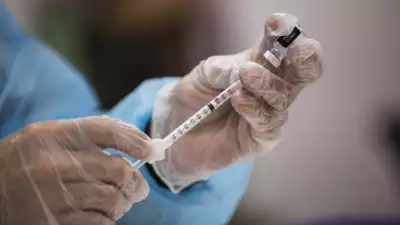
The OPV contains a live, weakened form of poliovirus that replicates in the intestine for a limited period, developing immunity by building up antibodies. According to the WHO, on rare occasions, OPV strains can genetically change when replicating in the gastrointestinal tract and may spread in communities that are not fully vaccinated against polio, particularly in areas with poor hygiene, sanitation, or overcrowding. The UN health body states, “The lower the population’s immunity, the longer vaccine-derived poliovirus survives and the more genetic changes it undergoes.” It adds that, in very rare instances, the vaccine-derived virus can mutate into a form that causes paralysis, similar to the wild poliovirus.