The arrest and possible deportation of Columbia University graduate student Mahmoud Khalil have ignited nationwide protests and raised serious concerns about the rights of green card holders in the United States—particularly those involved in political activism.
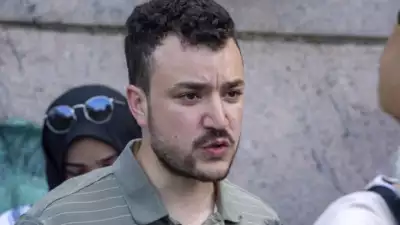
Khalil, a 30-year-old Palestinian student, earned his Master of Public Administration from Columbia’s School of International and Public Affairs in December 2024. A vocal advocate for Palestinian rights, he played a leading role in student-led protests urging the university to divest from companies linked to Israel’s military operations in Gaza.
His activism put him in the government’s crosshairs. On March 8, 2025, U.S. Immigration and Customs Enforcement (ICE) agents arrested Khalil at his university-owned apartment in Manhattan. The Department of Homeland Security (DHS) invoked a rarely used provision of the Immigration and Nationality Act, which allows the deportation of non-citizens if their presence is deemed to have “potentially serious adverse foreign policy consequences.” The Trump administration labeled Khalil a “Radical Foreign Pro-Hamas Student,” despite the fact that no criminal charges have been filed against him.
A Legal and Political Flashpoint
At the time of his arrest, Khalil was a lawful permanent resident, meaning he held a green card with legal status to live and work in the U.S. His attorney, Amy Greer, has called his detention a direct attack on free speech rather than a legitimate immigration enforcement action. Civil rights groups, including the American Civil Liberties Union (ACLU), have condemned the move, calling it “unprecedented, illegal, and un-American.”
Khalil’s case has sent shockwaves through student activist circles, raising fears that non-citizen students—particularly those on green cards or student visas—could be targeted for expressing controversial political views. While U.S. law protects free speech for all individuals, including immigrants, his case suggests the government may seek ways to bypass those protections under the guise of national security or foreign policy concerns.
Legal experts have warned that using the foreign policy provision in this manner sets a dangerous precedent. Bill Hing, a law professor at the University of San Francisco, argued that “if political activism can be framed as a foreign policy threat, any green card holder who criticizes government policies could face deportation.”
The case also echoes past crackdowns on activists and dissidents. During the McCarthy era, non-citizens suspected of Communist ties were deported under similar legal justifications. Now, with the Trump administration taking a hard stance against pro-Palestinian activism on college campuses, many fear history is repeating itself.
Protests and Legal Battle Intensify
In response to Khalil’s detention, protests have erupted at Columbia University and other campuses. Students and faculty are demanding his release, arguing that his deportation would set a dangerous precedent for free speech. Prominent figures, including actress Susan Sarandon, have voiced their support, warning that his case is about more than just one student—it’s about the fundamental rights of all immigrants in the U.S.
On March 12, a federal judge temporarily blocked Khalil’s deportation, allowing him to remain in the U.S. while his case is reviewed. However, his future remains uncertain. If the government succeeds in deporting him, it could pave the way for increased action against non-citizen activists—especially those on student visas, who lack the legal protections of green card holders.
For now, one thing is clear: immigrant students and green card holders engaged in political activism may face heightened scrutiny. Khalil’s case could be the first in a broader crackdown—leaving many to wonder, who’s next?