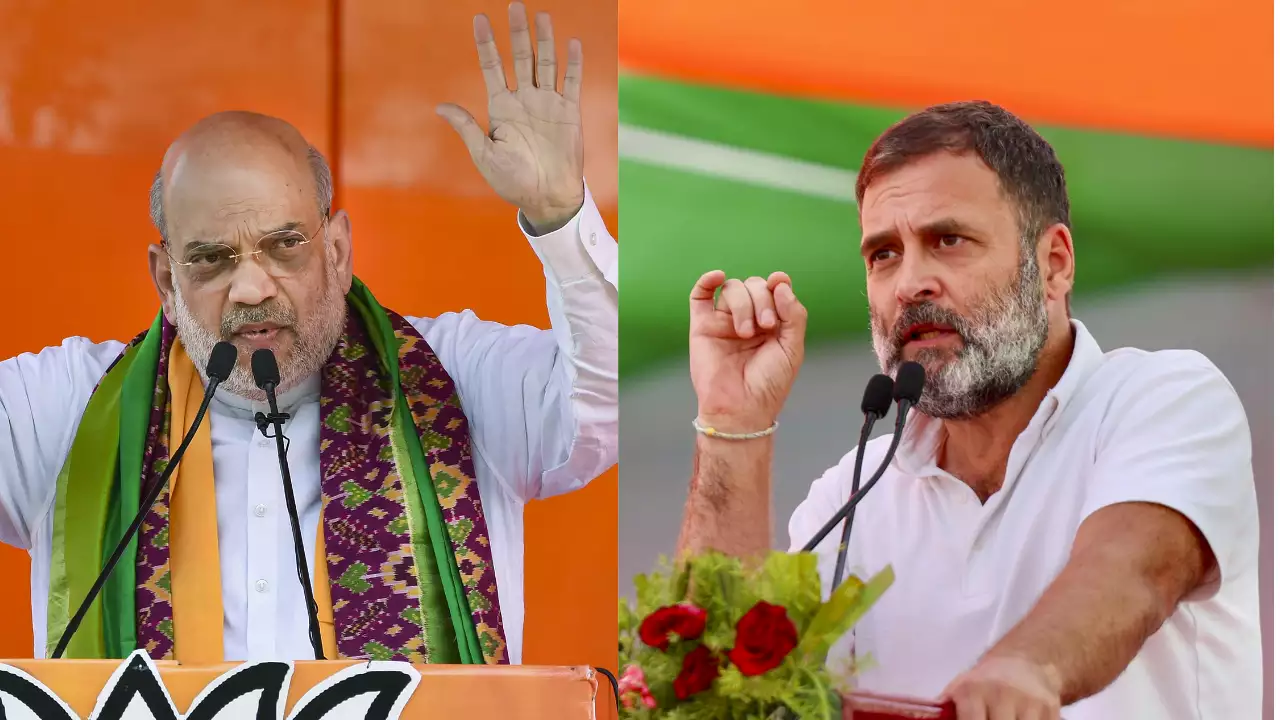
In a recent statement, Union Home Minister Amit Shah vehemently countered Congress leader Rahul Gandhi’s assertions regarding reservation policies in India. Shah asserted that Prime Minister Narendra Modi’s government remains steadfast in its commitment to preserving and strengthening reservation provisions for marginalized communities, dismissing Gandhi’s claims as misinformation.
Shah’s remarks come in response to Gandhi’s accusations during a campaign rally in Uttar Pradesh, where the Congress leader alleged that the Modi government planned to do away with reservation quotas for Scheduled Castes (SCs), Scheduled Tribes (STs), and Other Backward Classes (OBCs). Gandhi’s assertions sparked controversy and raised concerns among sections of society dependent on reservation benefits.
However, Shah sought to dispel any doubts surrounding the government’s stance on reservations, asserting that they are an essential tool for social justice and empowerment. He emphasized that not only does the Modi administration fully support existing reservation policies, but it also aims to expand their reach to ensure the inclusion of more deserving individuals from marginalized communities.
Furthermore, Shah accused Gandhi of spreading falsehoods to mislead the public and gain political mileage. He accused the Congress leader of resorting to divisive tactics and fear-mongering to sow seeds of doubt among vulnerable communities.
The Home Minister’s strong rebuttal underscores the significance of reservation policies in India’s socio-political landscape and highlights the ongoing debate surrounding their implementation and effectiveness. It also reflects the intensifying political rhetoric ahead of key elections, with both major parties engaging in a war of words to sway public opinion.
As the nation braces for upcoming state elections and looks ahead to the broader political landscape, Shah’s remarks serve as a reminder of the pivotal role that issues like reservation play in shaping electoral outcomes and public discourse. Amidst competing narratives and political maneuvering, the fate of reservation policies remains a topic of considerable significance and debate in India’s evolving socio-political landscape.